
A Waterfront Plan Has to Work Before It Can Impress
By Phillip Mullennax · · 4 min read
Fast Town Journal · Development · Technology and Design
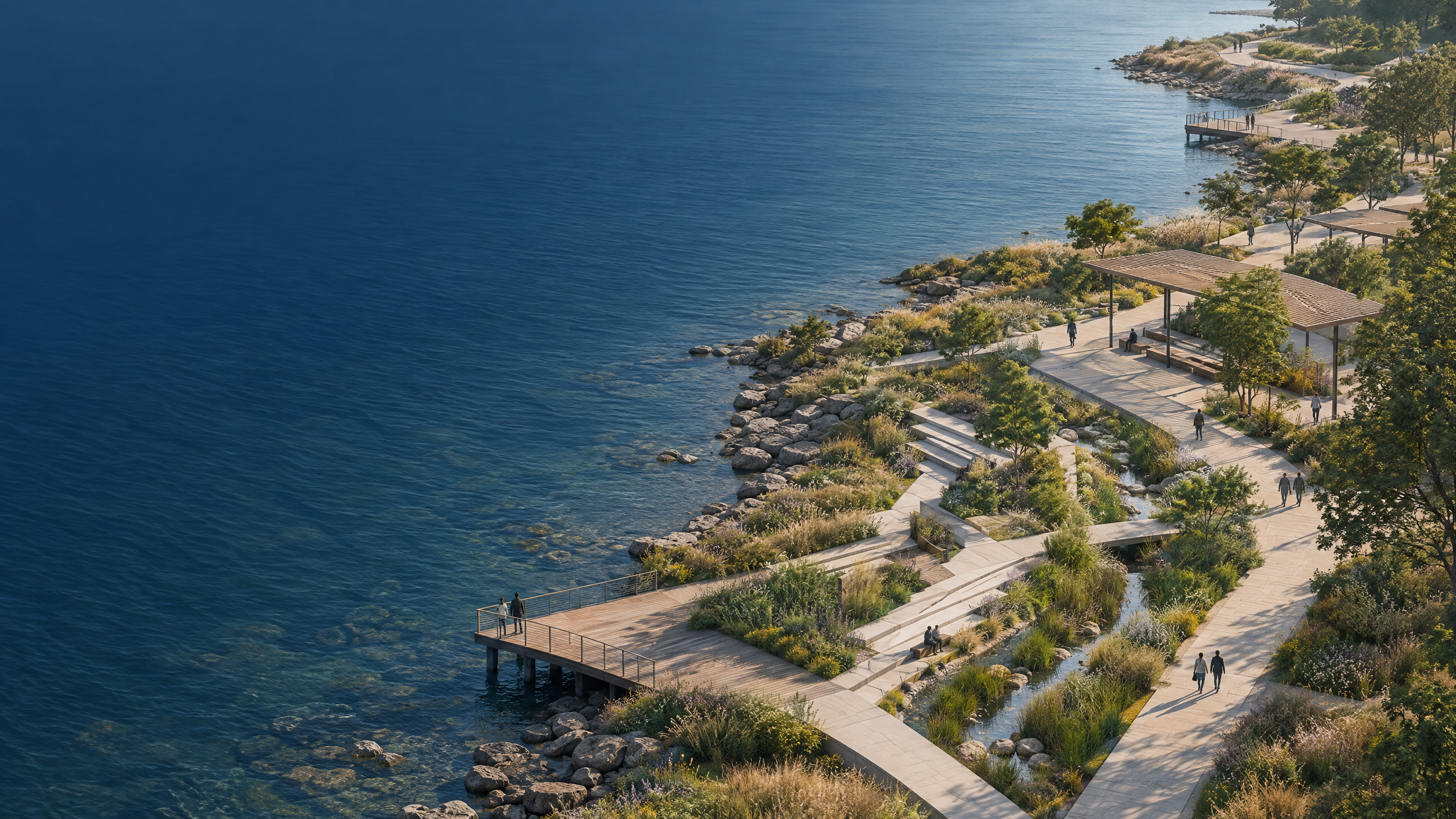
Original conceptual waterfront study; not a rendering of Ridgefield or a Fast Town project.
Public-safe editorial adaptation of the user-supplied approved Fast Town Weekly ICP final-release package. Original conceptual waterfront study; not a rendering of Ridgefield or a Fast Town project. View the current source.
A durable waterfront begins with public life: access, movement, ecology, and the surrounding town must work together before the rendering can persuade anyone.
Waterfront plans often arrive first as a view: an image of light, water, activity, and new places to gather. Those things matter. But the work that makes a waterfront last happens before the image is finished. It happens in the questions that are harder to render: how people get there, whether the water remains accessible, what the plan asks of the surrounding town, and how the environment, movement, and public life hold together on an ordinary day.
A September 10 letter from Ridgefield City Council to the Port of Ridgefield is a useful public example. The Council asked that a waterfront concept reinforce connections to the natural environment, boating opportunities, green infrastructure, and compatibility with downtown and the nearby wildlife refuge. It also asked for a formal master plan, traffic and parking analysis, economic analysis, detailed viewshed renderings, and a full environmental impact analysis. [2]
That is not a design style. It is a discipline.
Start with the life around the water
A waterfront does not exist apart from its town. It changes routines. It affects how someone moves from a main street to a dock, whether families can find shade and a place to pause, where deliveries and services go, what happens when weather changes, and how existing residents recognize themselves in the finished place.
Ridgefield’s letter is direct about that responsibility. “We only get one chance to get this project right for generations to come,” the Council wrote. [2] Whether a project is large or small, that is the right standard. A waterfront plan should not be judged only by the energy it creates on opening weekend. It should be judged by whether its daily use feels clear, comfortable, and connected to what was already there.
Access is the first amenity
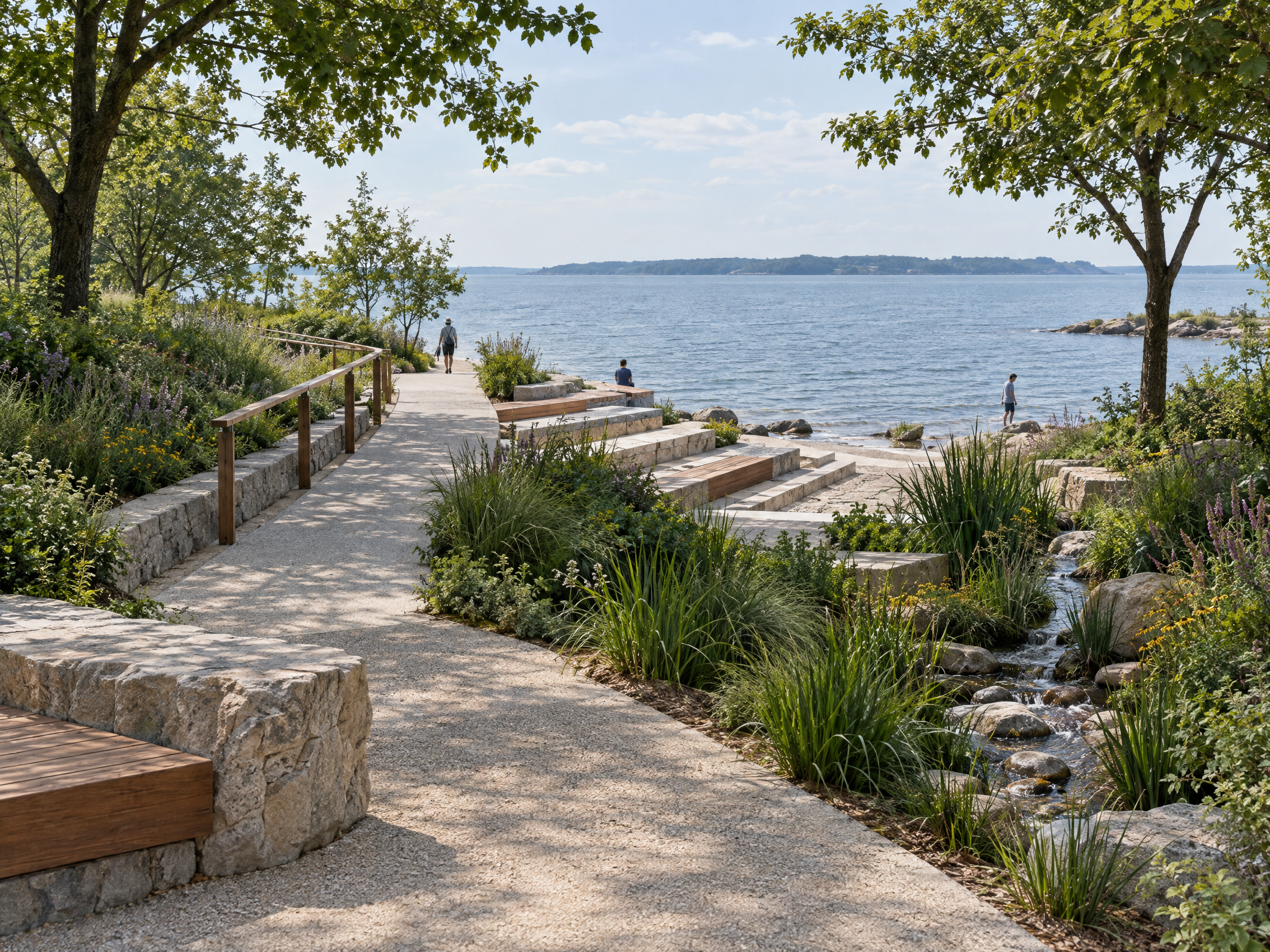
The strongest waterfronts make access feel natural. They do not make people decode the place before they can enjoy it.
That includes obvious pedestrian routes, room for different types of movement, places to sit without a transaction, durable shade, legible edges, and a relationship between the water and the rest of the community. It also includes the less glamorous work of traffic, parking, utilities, and environmental analysis. Those are not obstacles to the experience. They are what protect the experience once the novelty wears off.
Fit is not the same as restraint
When people talk about fitting a new waterfront into an existing town, they sometimes mean making it disappear. That is not the goal. The goal is to make the new work feel accountable to the place around it.
A strong plan can add activity and still respect historic streets, local patterns of use, water access, and the natural systems that make the shoreline worth protecting. The best answer is not always smaller. It is more resolved.
The work before the ribbon cutting
Ridgefield’s public letter matters because it names the stages that can be skipped when a project is treated as an image problem instead of a long-term place problem. Master planning, mobility analysis, viewshed studies, and environmental review are not the whole answer. But they are evidence that the hard questions have been asked before the promises harden.
That is the work residents can feel later, even if they never read a planning document. It shows up in the walk from parking to water, in the comfort of a path, in the clarity of a public edge, and in whether the finished place belongs to the town as much as it attracts a visitor.
A durable waterfront begins with public life: access, movement, ecology, and the surrounding town must work together before the rendering can persuade anyone.
Source note
This article describes the City of Ridgefield Council’s stated values and requested studies in its September 10 public letter. It does not predict environmental, traffic, market, property-value, development, or project outcomes, and it does not represent the Ridgefield waterfront as a Fast Town project. [2]
References

Contributor
Phillip Mullennax
Journal contributor
Phillip Mullennax is listed as the author of this Fast Town Journal adaptation. His Leadership profile identifies his role in connecting editorial, media, analytics, and audience strategy across Fast Town’s public communications.
Learn more
Explore Fast Town’s public story around automobile culture, considered hospitality, place-led design, and the long view.
Continue the conversation
Related Articles
3 related articles
Development · Technology and Design
Waterfront Access Starts at the Threshold
By Phillip Mullennax
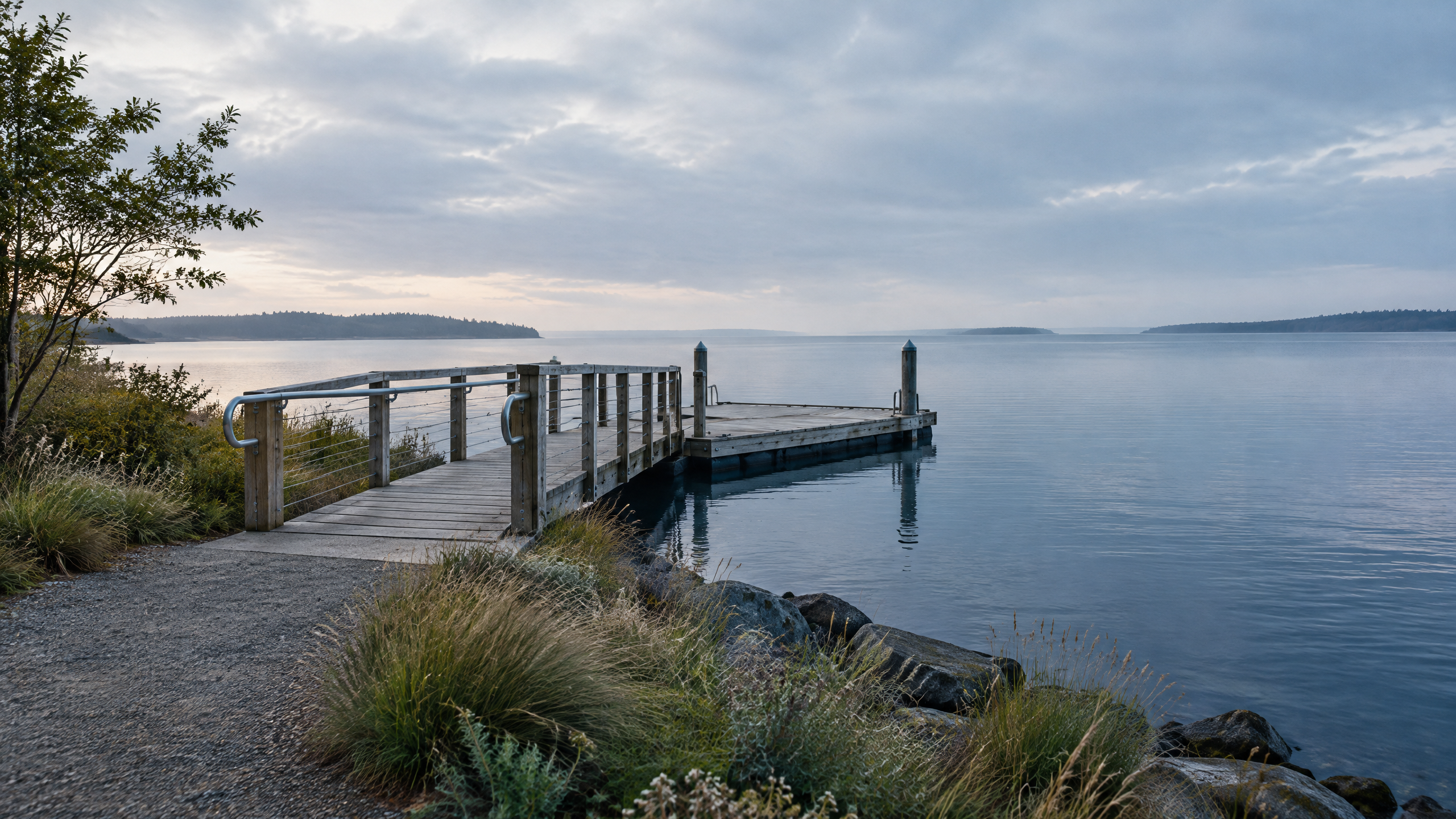
A waterfront becomes part of daily life through the small transitions that make shore, dock, path, and water feel connected.
October 3, 2026 · 4 min read
Development · Investment / REIP
Economic Scale Is Not a Development Brief: Four Questions for a Waterfront Destination
By Phillip Mullennax
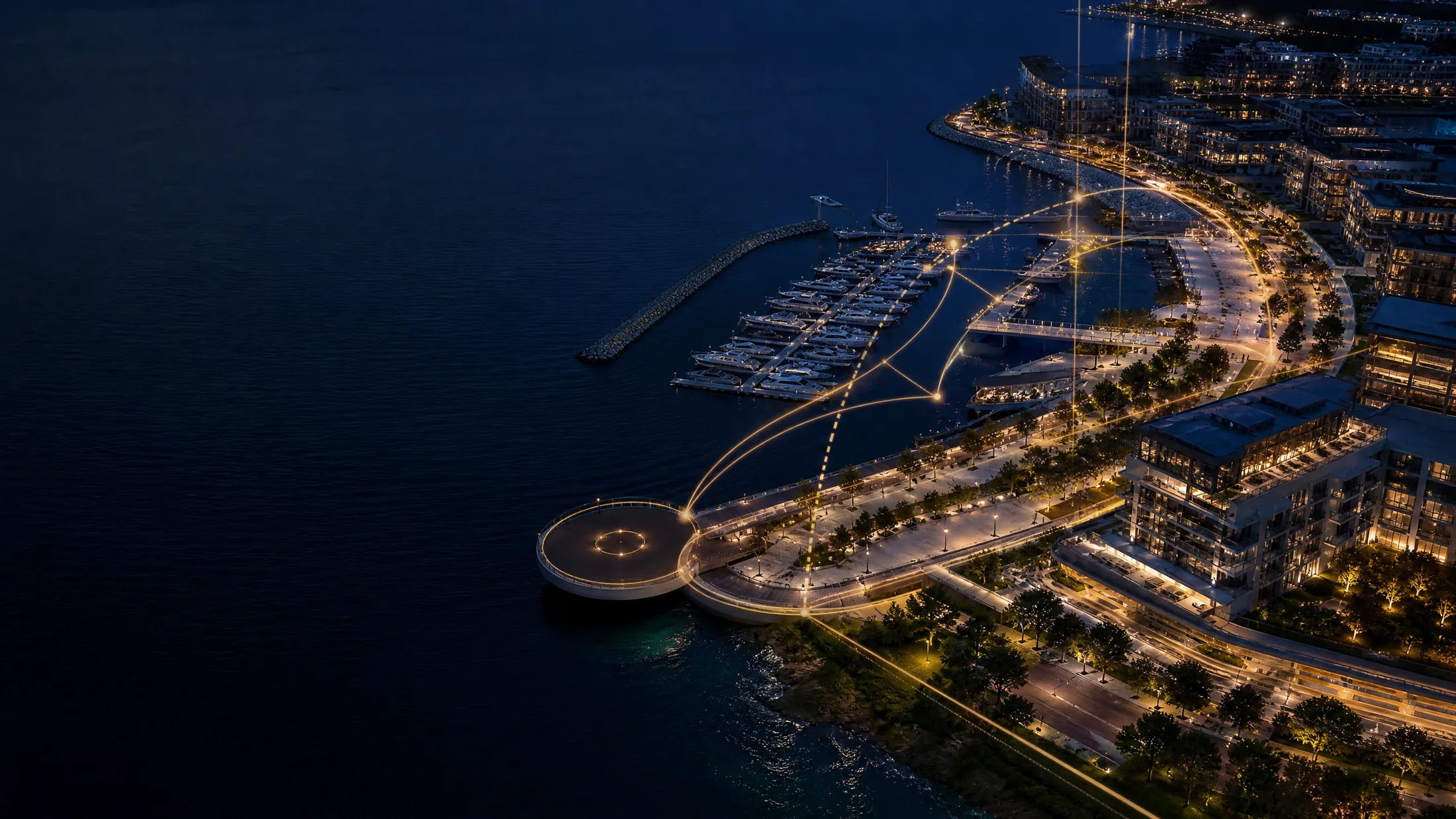
A source-led framework for asking what access, utilities, information, operations, and public realm must keep doing well when conditions change.
August 19, 2026 · 3 min read

Development
The Day After the Storm: A Waterfront Readiness Conversation Before the Doors Open
By Phillip Mullenax
A general educational framework for treating coastal readiness as an evidence threshold, not a visual impression or a map result.
August 17, 2026 · 6 min read