
Directional context
The relationships behind the experience.
Marina, gathering, collection culture, hospitality, culinary, and residential themes are explored as connected ideas—not as completed facilities or current availability.
Answer first
What makes an amenity meaningful?
Not the label alone, but how it supports the wider rhythm of arrival, privacy, service, place, and the people who gather around it.
Gather
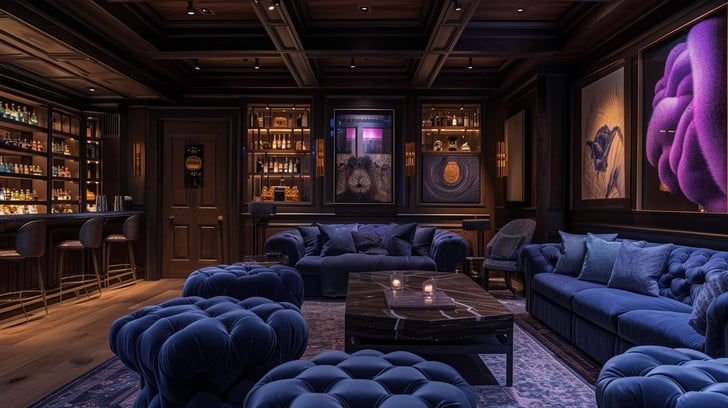
Spaces are considered through the quality of conversation, context, pacing, and invitation.
Move
Automotive and waterfront systems are viewed through interfaces, access, readiness, and continuity.
Belong
Hospitality becomes credible when care, privacy, and standards remain visible in the details.
Amenity ecosystem
Distinct experiences, designed to belong to one place.
 01 · Automotive
Exhibition and exchange.
A public design direction for displays, gatherings, simulator culture, and the stories behind significant machines.
 02 · Collection
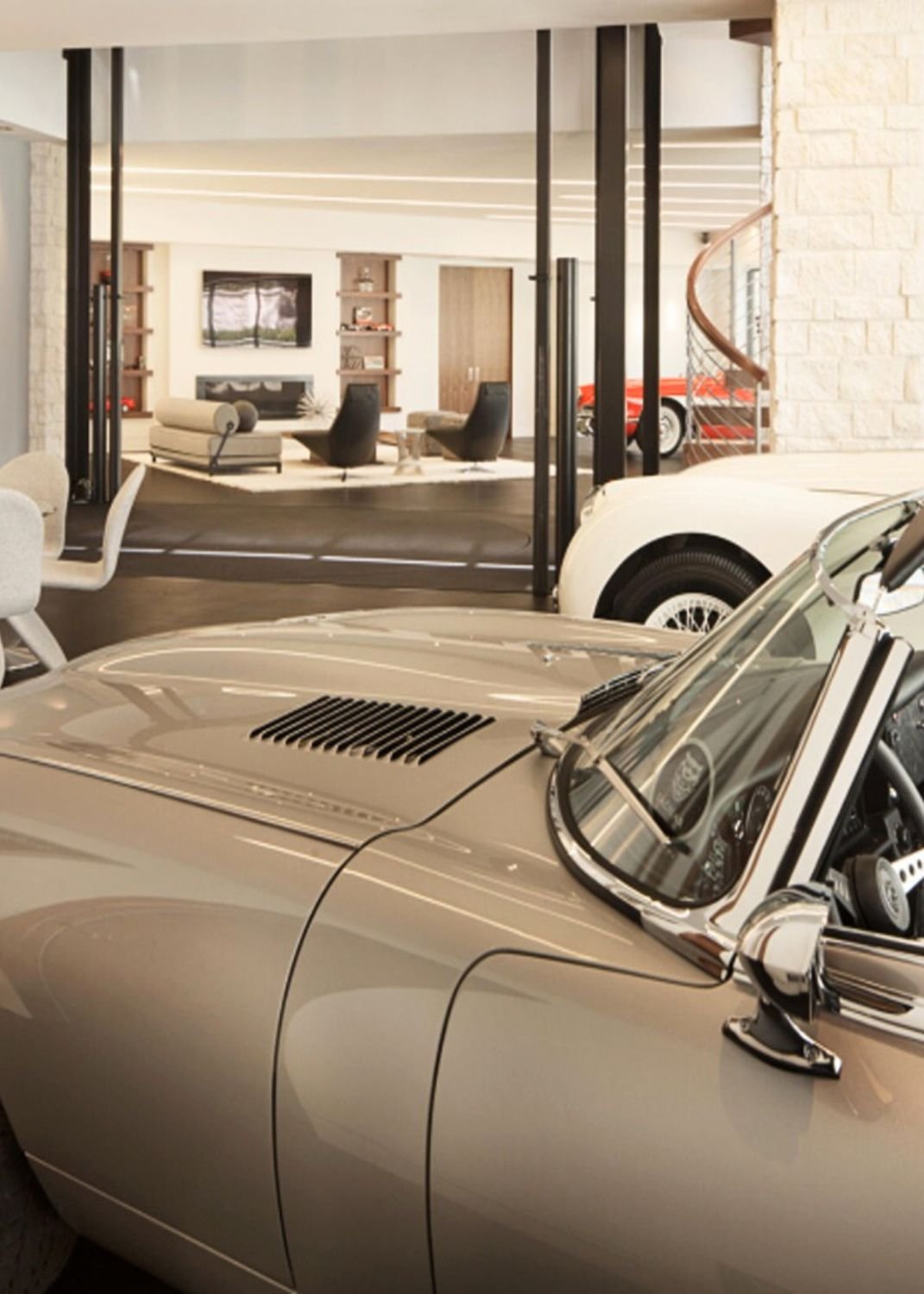
Space for the collection story.
Collector-oriented environments are explored through access, privacy, documentation, and the relationship between object and owner.
 03 · Waterfront
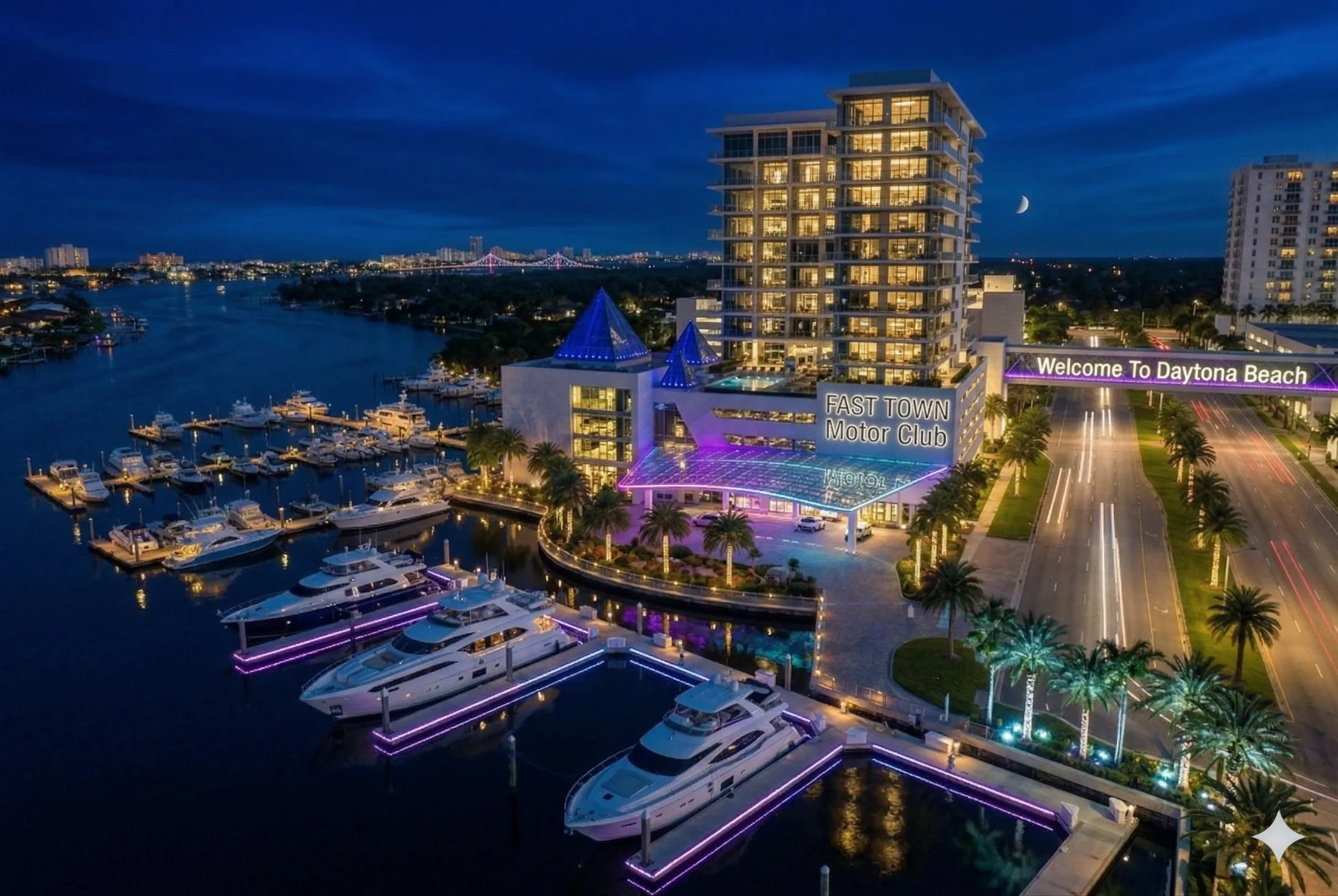
Movement across land and water.
Marina context is presented as a future-facing relationship between arrival, readiness, service, and waterfront life.
 04 · Living
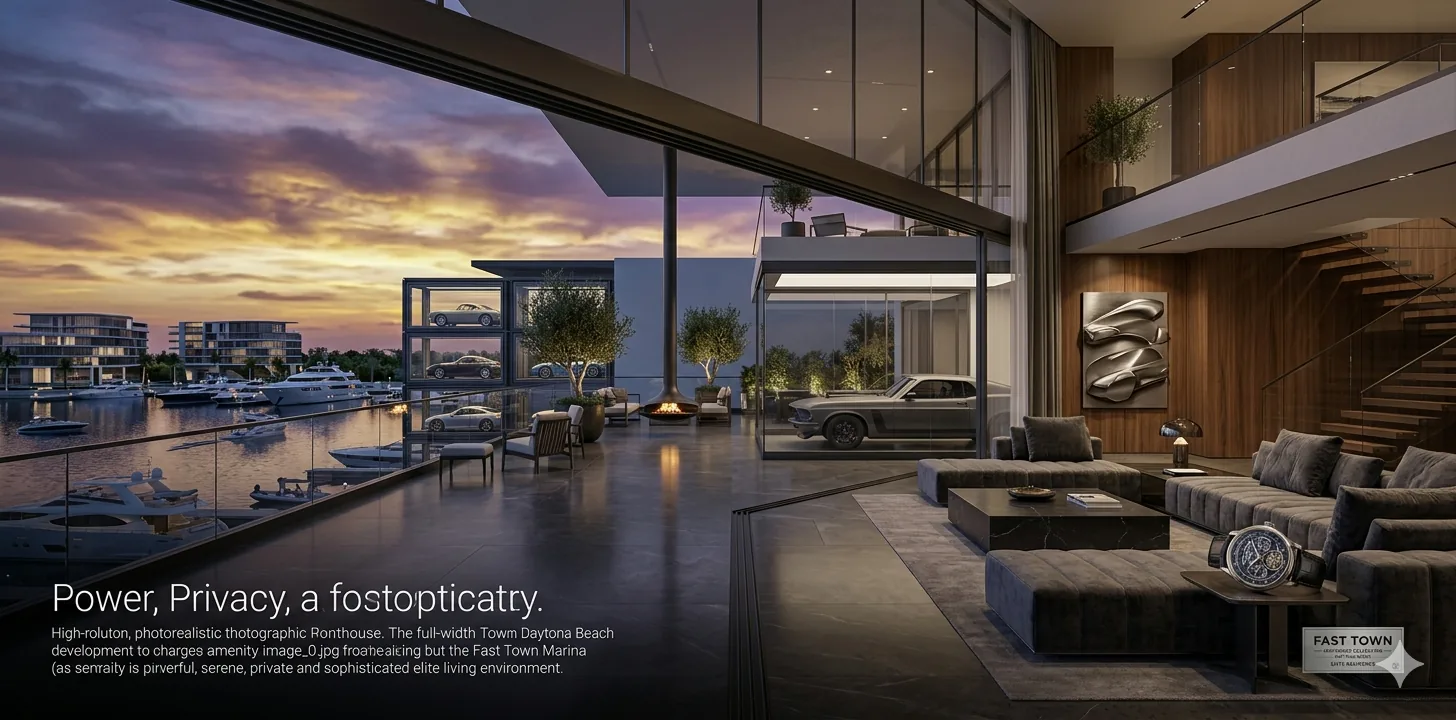
A longer relationship with place.
Residential and hospitality themes remain conceptual while expressing the ambition for continuity, privacy, and considered daily life.
Five directional studies
A fuller rhythm around the drive.
These are public design considerations for how a future Fast Town context might feel across a day. Each is directional: a study of atmosphere, adjacency, and intention—not a current amenity list or a promise of access.
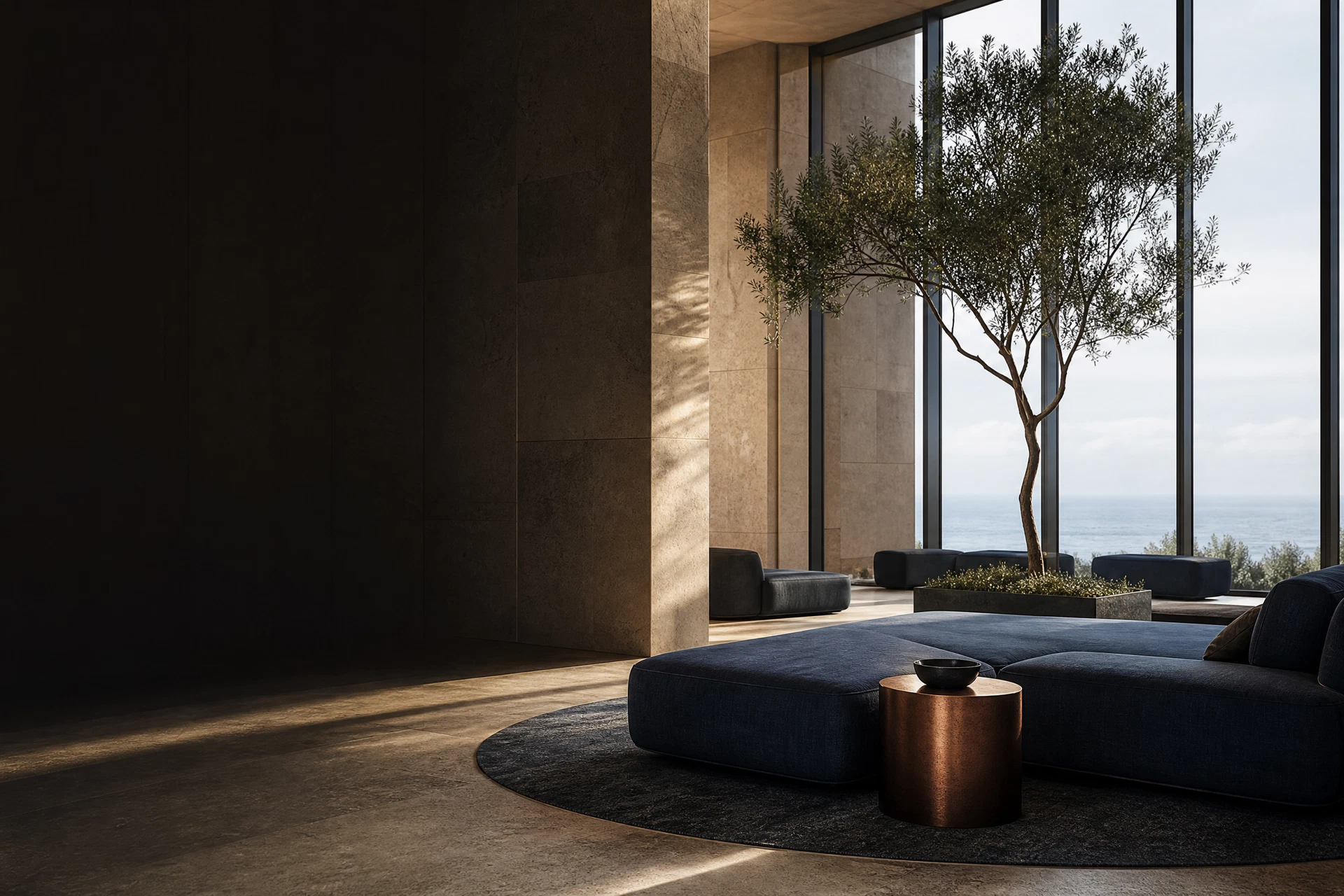
 01 · Wellness
Directional study
Space to reset, without a prescription.
Wellness is considered through light, quiet, material, air, and the ability to step out of the day’s momentum. The question is how a calm room can support a more deliberate rhythm around movement and gathering.
Public boundary
Directional design context only. No health outcome, clinical program, treatment, practitioner, or service is described.
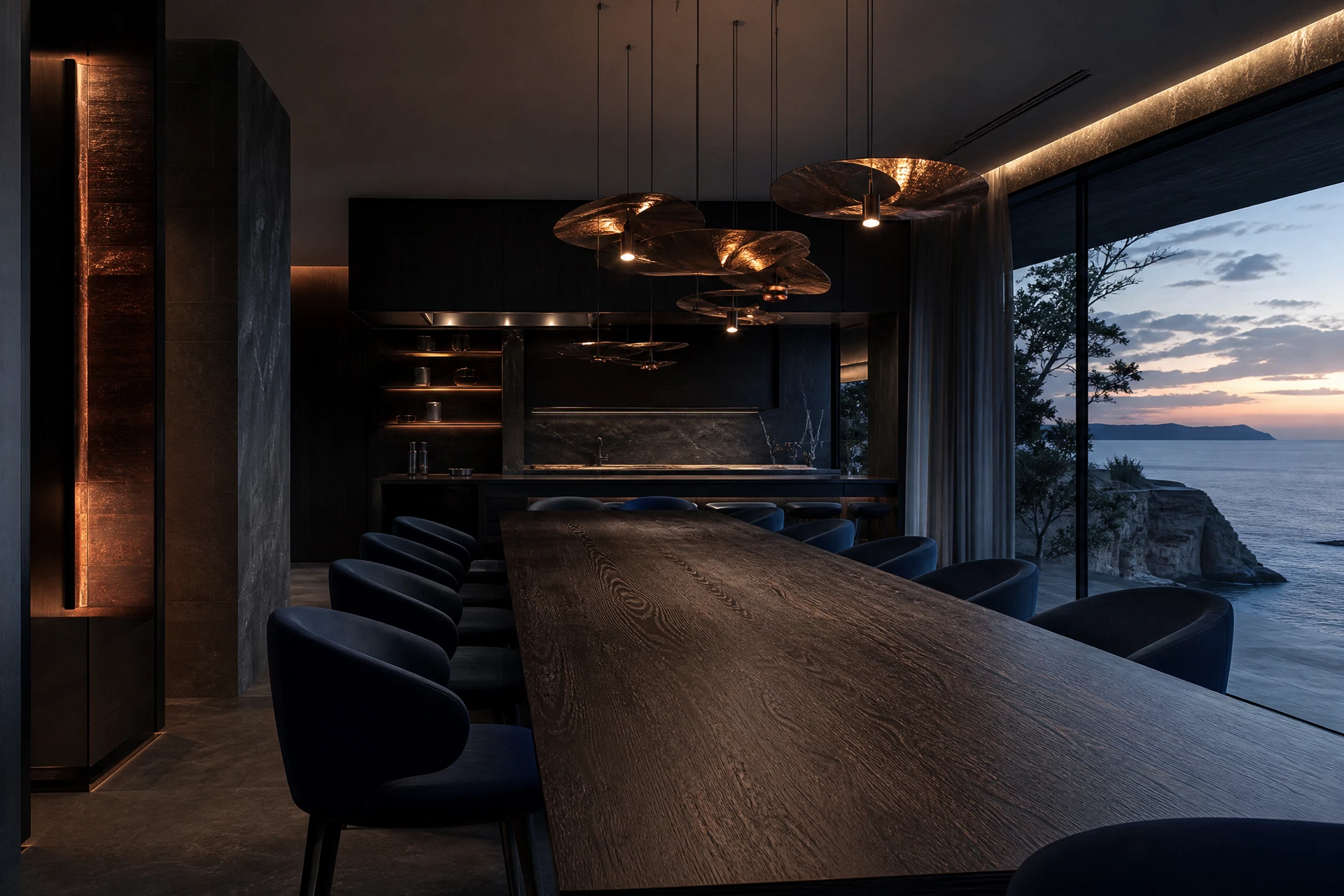
 02 · Culinary
Directional study
A table built around conversation.
Culinary direction begins with the social architecture of a shared table: pacing, craft, light, and the conversation that continues after a drive, a gathering, or time on the water.
Public boundary
Directional design context only. No restaurant, menu, chef relationship, dietary program, reservation, or service level is offered or implied.
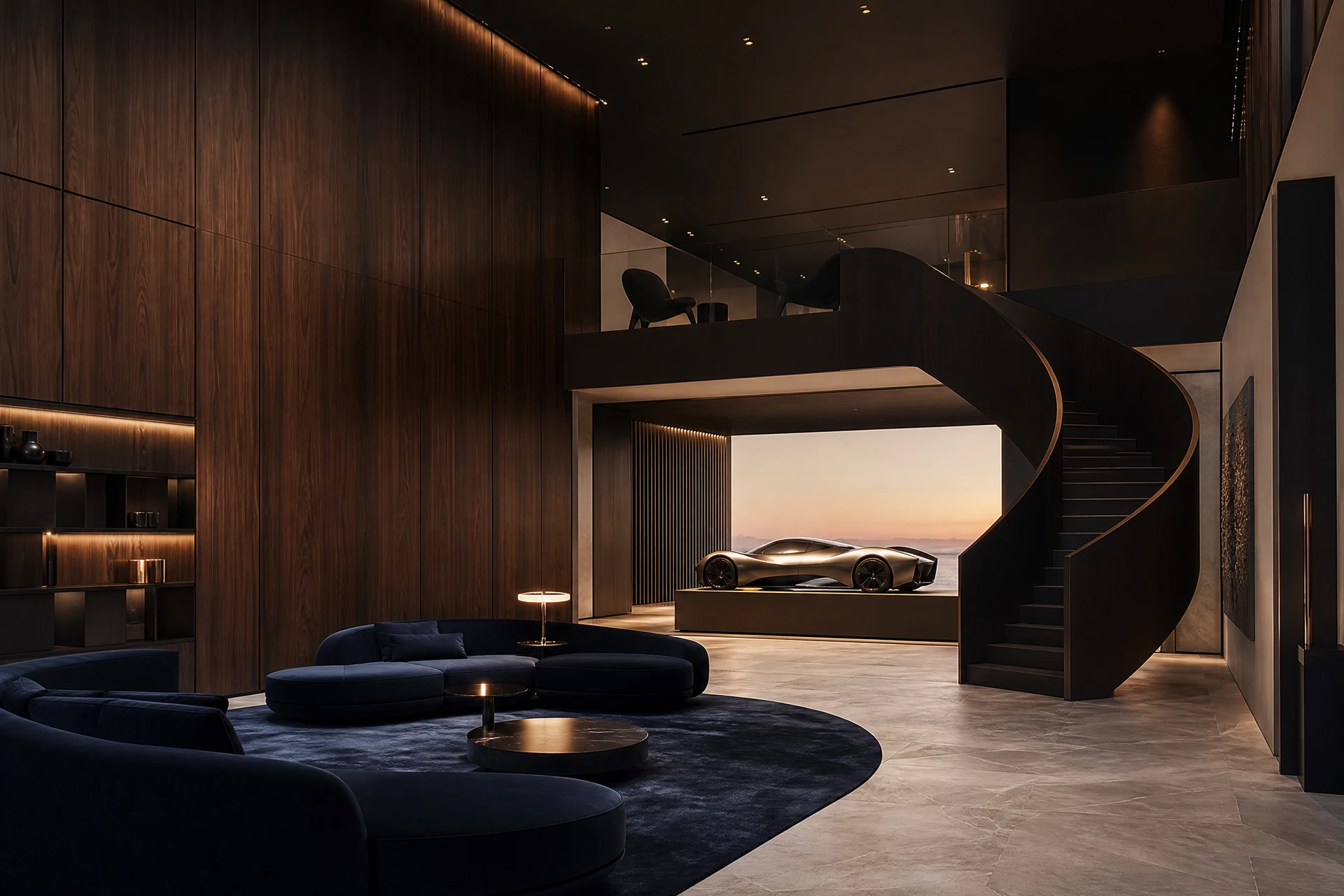
 03 · Residential
Directional study
The private room within a public story.
Residential thinking is explored as continuity: a quieter setting for collections, family, reflection, and the details that make a relationship with place feel personal over time.
Public boundary
Directional design context only. No residence, ownership, lease, rental, price, floor plan, availability, or transaction is represented.
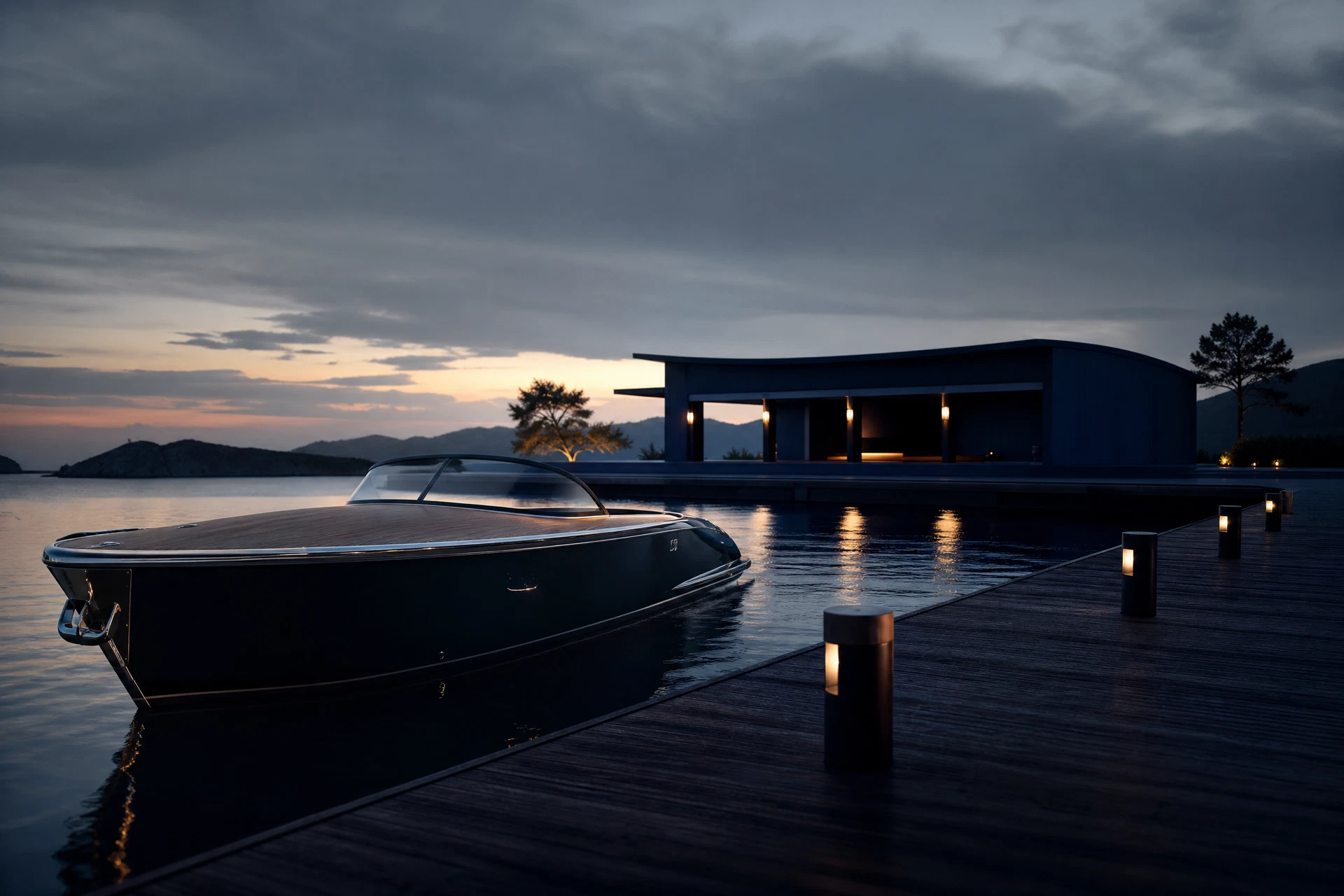
 04 · Marina
Directional study
The waterfront as a threshold.
The marina lens considers the transition between land and water—arrival, the edge of a dock, the quiet of twilight, and the responsibility of designing with waterfront context in mind.
Public boundary
Directional design context only. No berth, dock, vessel storage, marina capacity, access, reservation, service, availability, or transaction is described.
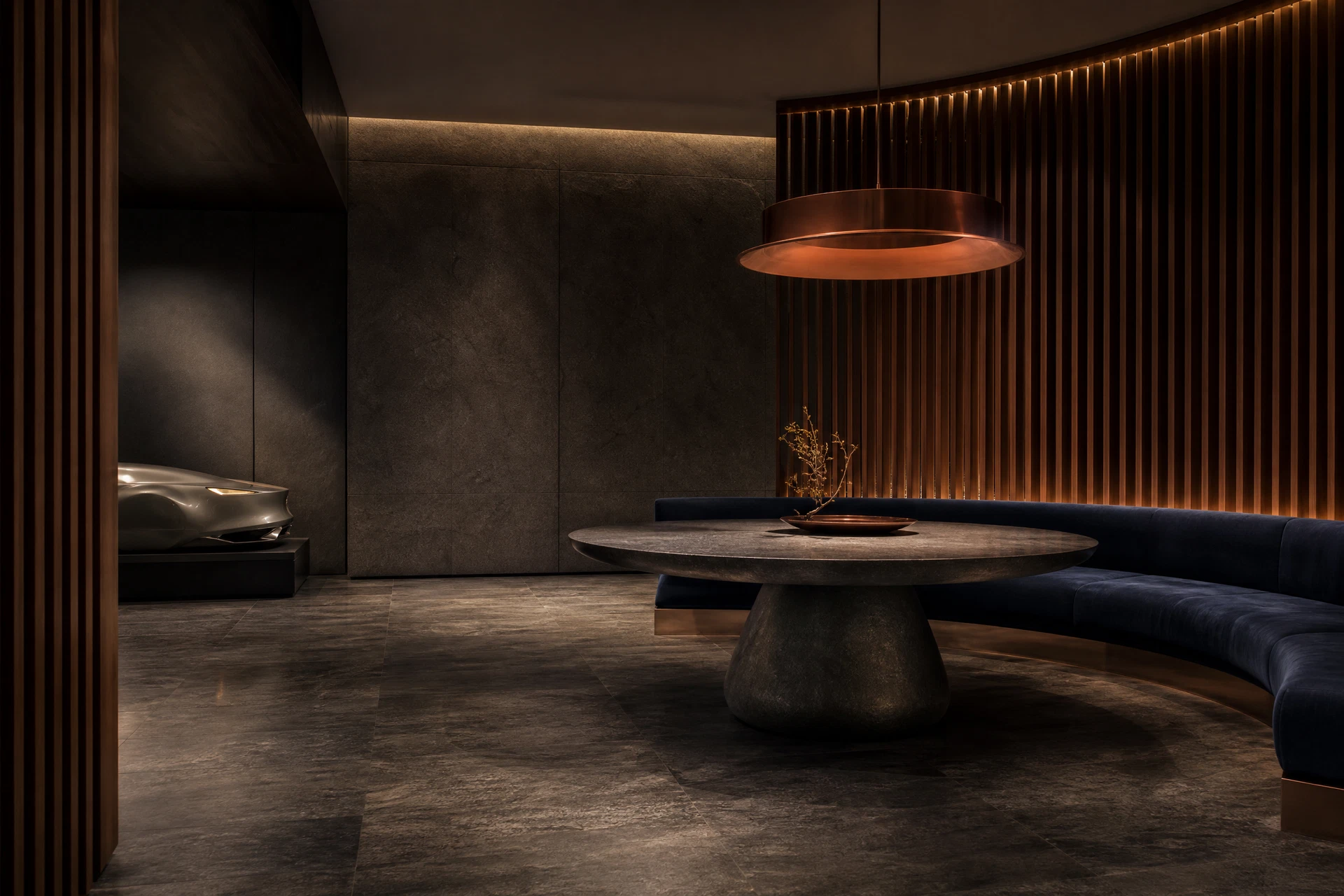
 05 · Hospitality
Directional study
The tone of a welcome.
Hospitality is treated as an atmosphere rather than a checklist: composure, privacy, material warmth, and a setting that knows when to make room for conversation and when to stay quiet.
Public boundary
Directional design context only. No guest access, membership, invitation, service level, event, booking, reservation, or operating venue is represented.
Clearly stated
Direction without implication.
This page outlines experiences and relationships Fast Town is exploring. It is a point of view, not a description of operations, reservations, residences, membership, pricing, availability, or a transaction.
Future vision
Wellness, culinary, residential, marina, and hospitality references are directional. No health outcome, service level, reservation, sale, or rental claim is made.