
What a Conserved Race Car Keeps That Restoration Can Lose
By Phillip Mullennax · · 5 min read

Fast Town Journal · Automotive Culture
Public-safe editorial adaptation of the user-supplied FT-WEEKLY-2026-09-02 final-review package. It uses original editorial illustrations, not photographs of the cited Alfa Romeo, Revs Institute, Lime Rock, or a real vehicle, and makes no affiliation, service, offering, outcome, or guarantee claim. View the current source.
A documented conservation case offers a practical way to think about preservation, patina, historical evidence, and the judgment behind a serious collection.
A historic race car is not only a machine to be returned to a specification. It is also a record of what happened after it left the factory. The best conservation work knows the difference.
The 1964 Alfa Romeo Giulia TZ held by the Miles Collier Collections gives that idea a very practical shape. Chassis 750052 won the 1600 cc class at the Sebring 12 Hours, finishing 13th overall. Decades later, the car still carried the marks of a long working life: chips across its nose, fatigue cracks, old repairs, layers of paint, and the small compromises that accumulate when a racing car keeps racing. [1]
The clue was in the wrong shade of red
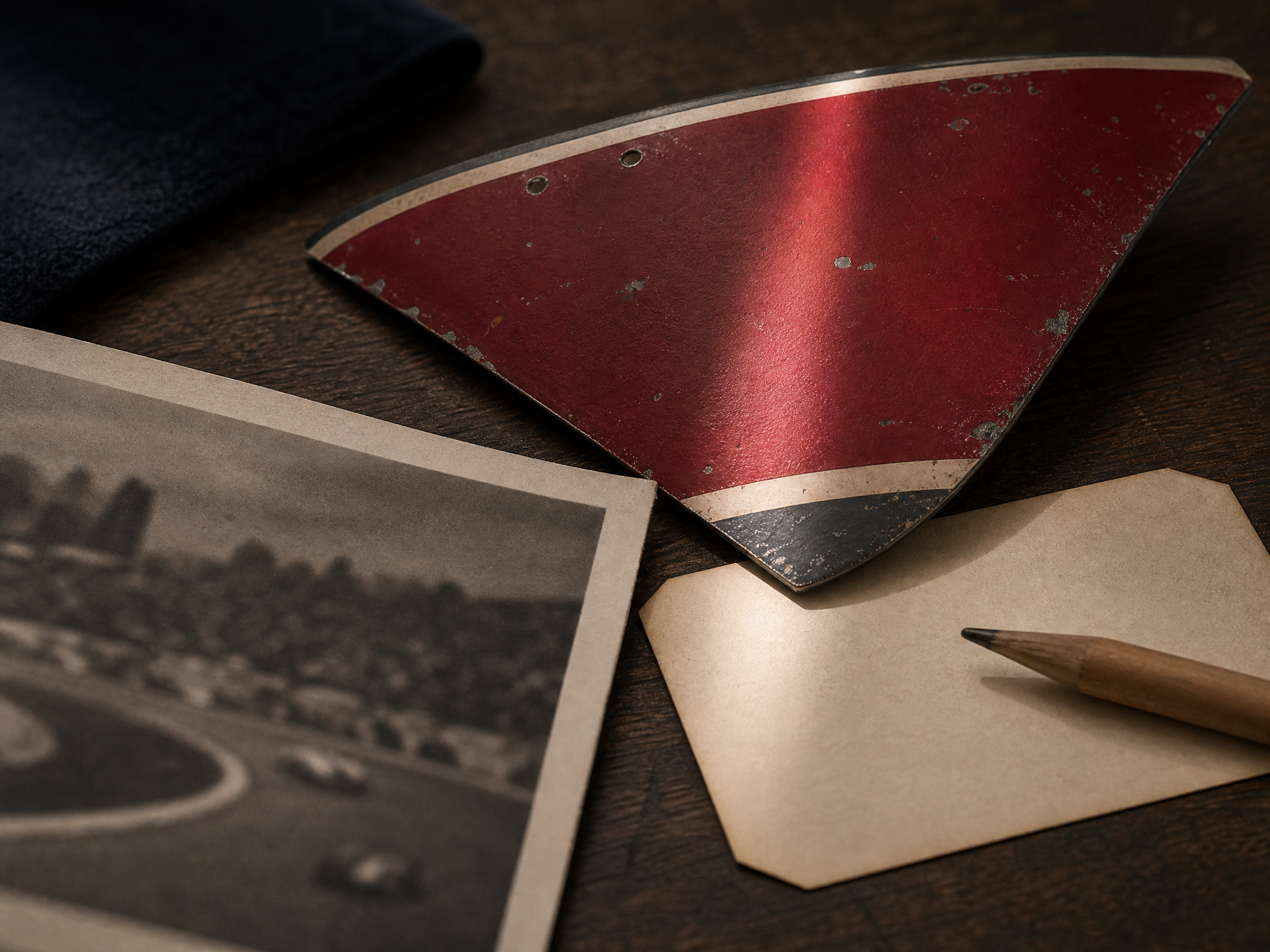
The Revs Institute team was not trying to make the Alfa look casually worn. They were trying to make its Sebring appearance more historically accurate. Period photographs showed that the front nose of the red factory-supported cars had been repainted in a different shade before the 1964 race. The mismatch was odd, but it was also documented. [1]
Correcting the color created a real problem. The car’s existing surface carried decades of use. Repainting the nose would recreate a meaningful 1964 detail, but it risked wiping away the history that had accumulated since then.
“Only by preserving every historical mark in a way that allows it to appear in the new finish would we be saving the Alfa’s unique history.” — Miles C. Collier [1]
That is a better definition of conservation than “leave everything alone.” The task is not to worship decay. It is to separate evidence from distraction and then make each intervention explainable.
A method built around restraint
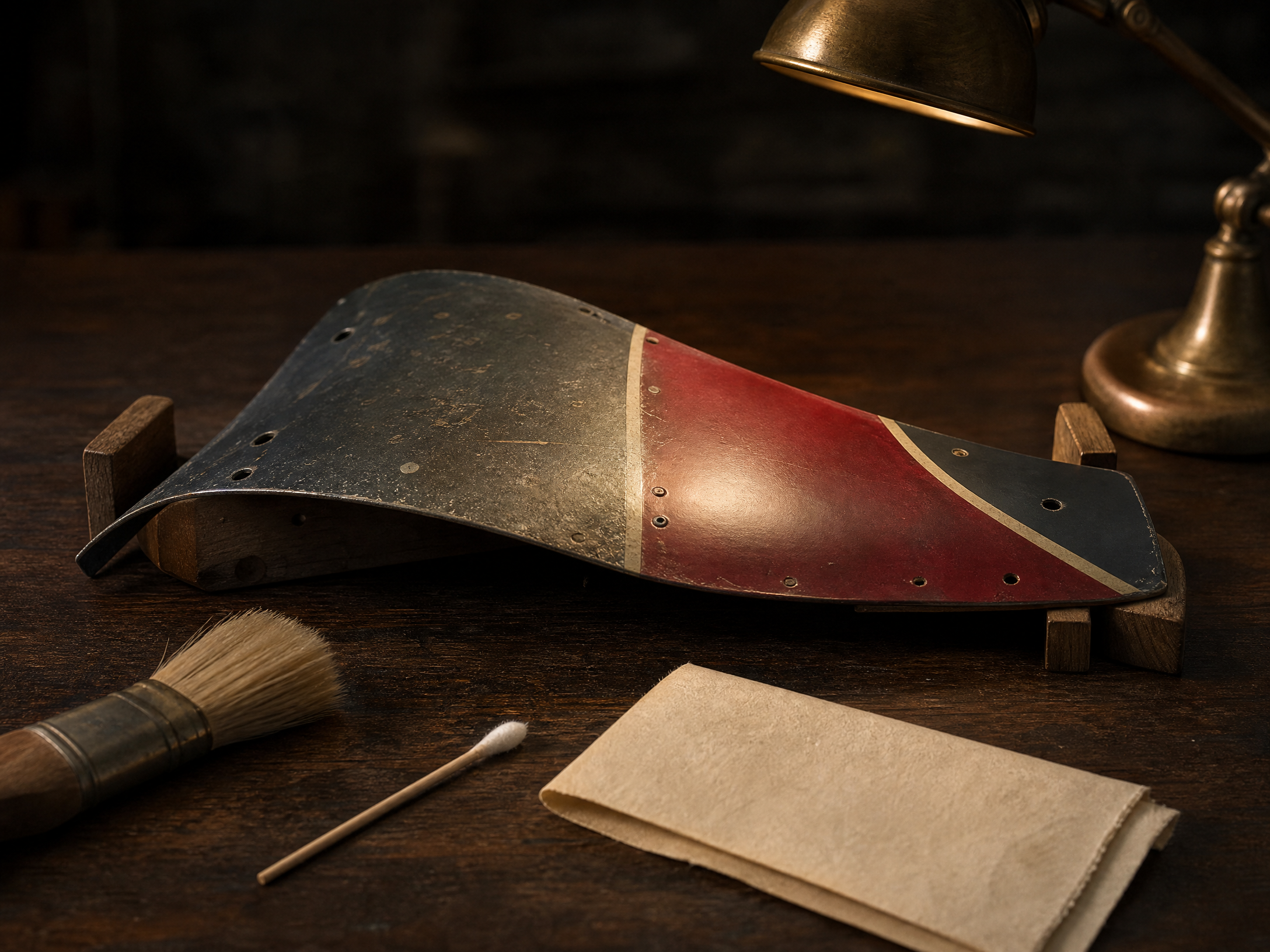
The Revs team used a liquid masking agent to protect chips, scratches, and losses of paint before applying the historically correct color. Afterward, carbon-dioxide blasting removed the masking material and the new paint over it, allowing the older marks to remain visible. [1]
The finished surface held two truths at once: the nose now better reflected the car’s documented Sebring configuration, and the weathering from decades of use was still there to read.
A recent Magneto report says the Alfa is among the cars scheduled for Lime Rock Historic Festival, running September 4–7, 2026. That setting is a useful reminder that historic machinery is not only preserved behind glass. The strongest collections keep a conversation going between the object, the documentation, and the people who know how to interpret both. [2]
A collector’s work begins before the work order
The important question is not whether every historic car should be conserved instead of restored. It is whether the owner and the specialist have agreed on what the car is supposed to carry forward.
Before major work begins, a serious collector can ask a few direct questions. What is original, and what is simply old? What do period photographs, race records, and previous work orders actually prove? Will this intervention clarify the car’s history or overwrite it? Can the work be explained later?
Those are not rules for every car. They are a discipline of attention. The most valuable collections are often not the ones with the most perfect finishes. They are the ones where the owner can explain what was retained, what was changed, and why.
That is also what makes a collection worth returning to. A well-kept car can offer more than a visual impression. It can show the record of a life lived at speed.
Source note
This article discusses a reported conservation case. Fast Town has no stated relationship with Revs Institute, Lime Rock Historic Festival, Alfa Romeo, or the cited publishers. It does not offer restoration, valuation, investment, insurance, or conservation advice.
References

Contributor
Phillip Mullennax
Journal contributor
Phillip Mullennax is listed as the author of this Fast Town Journal adaptation. His Leadership profile identifies his role in connecting editorial, media, analytics, and audience strategy across Fast Town’s public communications.
Continue the conversation
Related Articles
3 related articles
Automotive Culture · Collector Cars · Provenance & Coachwork
Before the Hammer: Reading Lot 389’s Duesenberg Provenance Record
By Phillip Mullennax
RM’s Lot 389 offers a clear pre-sale lesson: read the Murphy body, ownership record, composite-engine description, and title disclosure as one provenance story.
October 8, 2026 · 5 min read
Automotive Culture
What a Concours Can—and Cannot—Confirm
By Phillip Mullennax
A concours trophy can focus attention on a car. The record behind it—identity, condition, stewardship, and evidence—is what lets the story stand up over time.
October 1, 2026 · 4 min read
Automotive Culture
A Daughter’s Promise, A Cobra’s Return
By Phillip Mullennax
A long-dormant Cobra restoration becomes a story of family continuity, careful evidence, and the patient work of returning a car to the road.
September 22, 2026 · 4 min read