Jamie Chadwick: A First Test in Hypercar, and the Work It Represents
By Phillip Mullennax · · 5 min read
Fast Town Journal · Motorsport Culture · Women in Motorsports
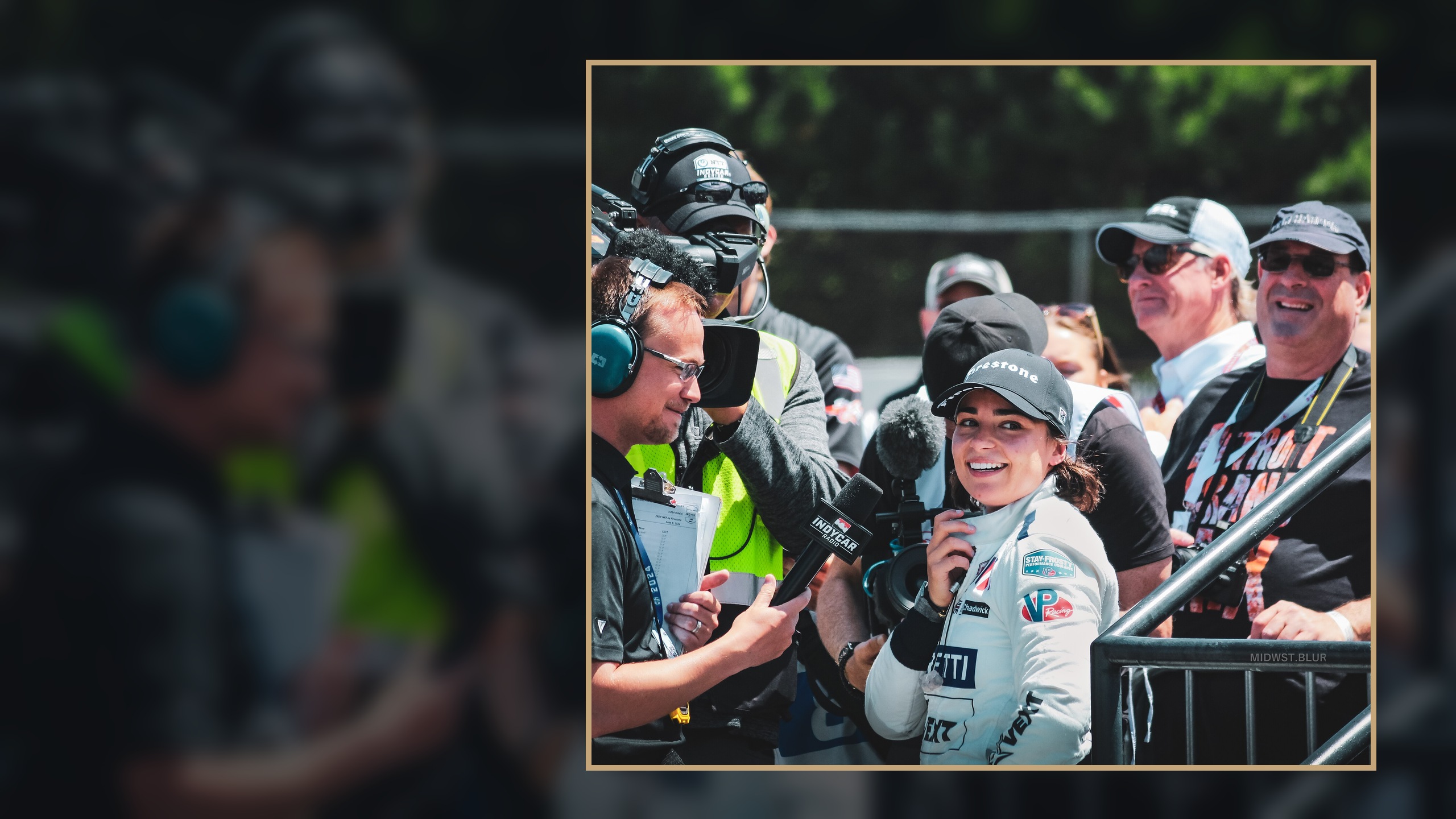
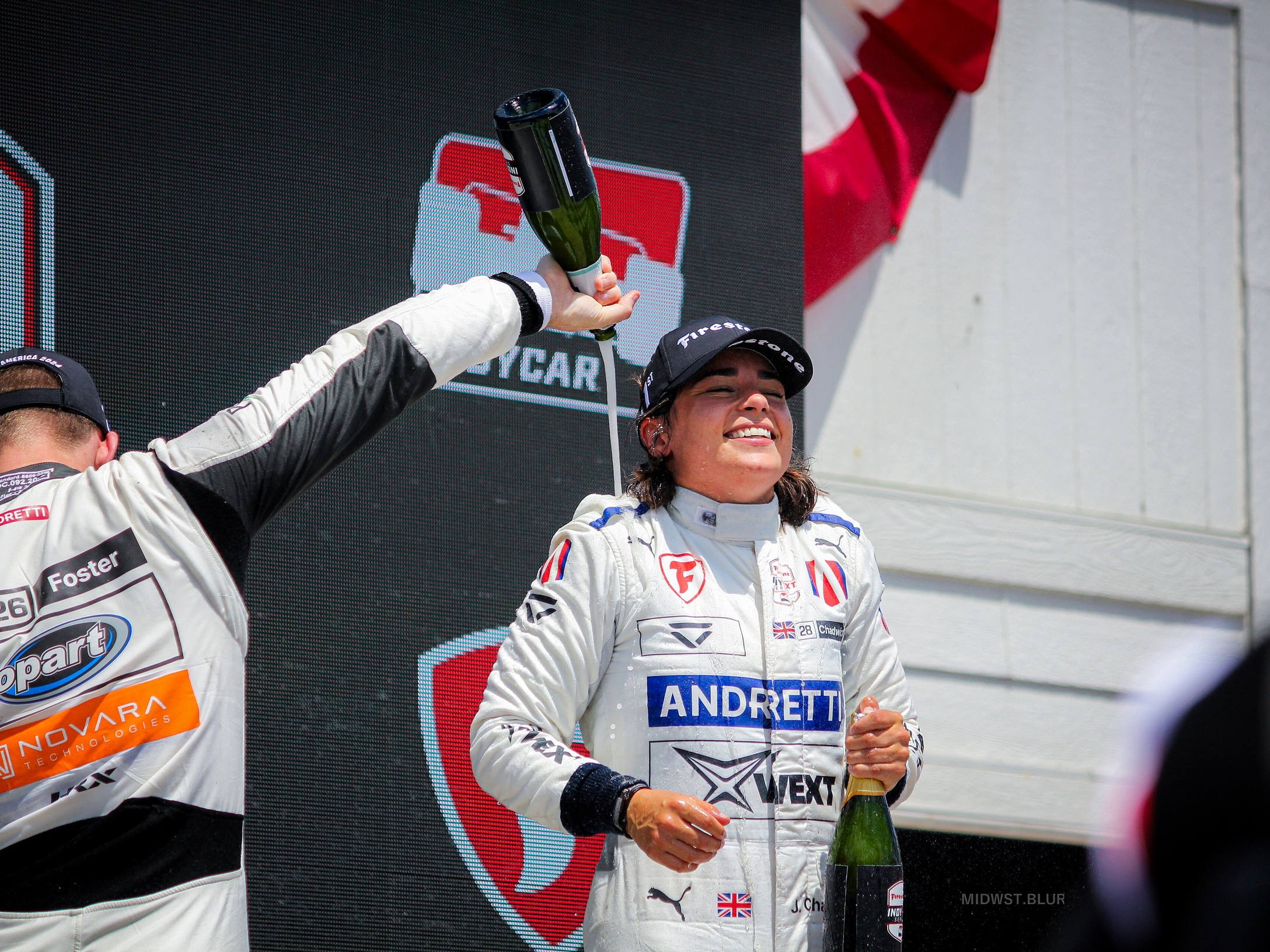
Photo: MIDWST.BLUR / Wikimedia Commons · CC BY 2.0 · Cropped for layout
Public-safe editorial adaptation of the user-supplied approved Jamie Chadwick Women in Motor Sports Wednesday final-release package. The licensed 2024 Road America documentary photographs are career context only; they do not depict Le Mans, Genesis, Hypercar, 2026, or Test Day imagery, and no endorsement or affiliation is implied. View the current source.
Jamie Chadwick’s five-lap Hypercar Test Day at Le Mans is best understood with precision: an earned opening, a visible standard, and more work ahead.
Jamie Chadwick’s 2026 Hypercar Test Day at Le Mans lasted five laps. The significance of those laps is not that they announce a finished arrival. It is that they represent a clear, earned opening into endurance racing’s top class. The official 24 Hours of Le Mans report identifies Chadwick as the first woman racer to drive a Hypercar at the Circuit des 24 Heures du Mans, in the #17 Genesis GMR-001 as the reserve driver for Genesis Magma Racing. [1]
That fact deserves precision. It was Test Day, not a race start. It was a short run, not a full-season seat. The milestone is important precisely because it should not be inflated. It points to the work that got her there—and to the standard she still expects of herself.
Five laps, a higher standard
Motorsport has a habit of making every first sound final. A first win. A first start. A first seat. The language is understandable, but it can hide the real work.
Chadwick’s appearance at Le Mans offers a better way to look at it. The top Hypercar class is built around complex machinery, traffic management, energy and power management, team communication, and a level of pace that leaves no room for broad claims. A Test Day run does not answer every question. It gives a driver a chance to begin answering the right ones.
Chadwick did not describe the experience as an endpoint. “It was incredible,” she said in official 24 Hours of Le Mans coverage. “I think it’s only a question of time before we see many women on the Hypercar grid at Le Mans. I hope so. It’s a step in the right direction anyway.” [1]
That final sentence is the one worth staying with. A step in the right direction is not a victory lap. It is an invitation to keep the standard high.
The path was built across disciplines
The most useful part of Chadwick’s record is its range. The official Le Mans profile from 2025 describes a path that began in karting, included a British GT4 title in 2015 with Ross Gunn, moved through W Series, and then took her into Indy NXT and higher-level LMP2 endurance racing. [2]
That kind of progression is easy to summarize and hard to do. Each category asks something different of a driver. A GT car rewards a particular kind of patience and feel. Single-seaters require another rhythm. Endurance racing expands the job again: shared responsibility, longer preparation cycles, tire and traffic management, engineering dialogue, and the humility to learn from people who have seen the race at its hardest.
Chadwick spoke directly about that shift during her earlier Le Mans preparation. “It’s funny how quickly you transition from just being happy to be here to wanting to find performance, to drive as fast as possible and go for a lap time,” she said. [2]
That is a racer’s answer. The occasion matters. Then the work takes over.
Opportunity is only useful when it exposes the work
There is a difference between being visible and being tested. The best opportunities in motorsport do both.
A serious driver is not asking only for a place in the picture. She is asking for enough responsibility to show what she can do with it. That means working inside the limits of the category, earning the confidence of the people around the car, and learning quickly enough that the next opportunity is deserved on its own terms.
The official 2026 Le Mans report describes Hypercar as a world apart from LMP2: faster in the straights and corners, with more demanding traffic and more subtle power management. [1] That is why Chadwick’s Test Day matters beyond the headline. It was a chance to meet a more difficult version of the job.
The milestone also belongs in a longer history. The same official report notes that women have competed at Le Mans for generations, from Marguerite Mareuse and Odette Siko in 1930 to more recent competitors. Chadwick’s five-lap Hypercar run adds a new chapter to that record, not a conclusion to it. [1]
What the next generation can take from it
There is a valuable lesson in Chadwick’s approach for anyone building a body of work in a demanding field.
Do not mistake access for arrival. Use access to learn faster. Do not let the first big moment become a story you have to defend. Let it become a standard you are willing to meet again. The visibility will come. The deeper advantage is being ready when the work gets more technical, more public, and more demanding.
Chadwick’s Le Mans Test Day did not lower the threshold for the Hypercar class. It showed that the threshold is reachable when preparation is taken seriously enough.
That is what makes this a Women in Motor Sports Wednesday story. Not simply that a woman took the wheel, but that Chadwick approached the opportunity as a racer: clear-eyed about the category, appreciative of the moment, and immediately focused on performance.
A first can be historic without being overstated. Jamie Chadwick’s five Hypercar Test Day laps at Le Mans show what a serious opportunity looks like: earned preparation, a visible standard, and more work ahead.
Questions readers ask
Did Jamie Chadwick race a Hypercar at the 2026 24 Hours of Le Mans?
No. The official report describes a Test Day appearance: Chadwick completed five laps in the #17 Genesis GMR-001 Hypercar as Genesis Magma Racing’s reserve driver. [1]
Why is the Test Day run significant?
The official 24 Hours of Le Mans report calls Chadwick the first woman racer to drive a Hypercar at the Circuit des 24 Heures du Mans. The milestone is best understood as a meaningful, bounded test opportunity—not as confirmation of a future race seat or program. [1]
What is the article’s point of view?
The lesson is about preparation and standards. A credible breakthrough does not erase the work ahead. It makes that work more visible.
Source note
This profile draws on official 24 Hours of Le Mans coverage from September 6, 2026 and June 11, 2025. It does not predict future seats, race starts, contracts, sponsorships, team affiliations, or results. Fast Town is not affiliated with Jamie Chadwick, Genesis Magma Racing, the 24 Hours of Le Mans, or any named source organization.
References
- [1] 24 Hours of Le Mans, “2026 24 Hours of Le Mans: Jamie Chadwick makes history in the Hypercar class,” September 6, 2026.
- [2] 24 Hours of Le Mans, “Jamie Chadwick intends to work her way up to Hypercar,” June 11, 2025.
- [3] Wikimedia Commons, “Jamie Chadwick (53784756947),” MIDWST.BLUR, CC BY 2.0.
- [4] Wikimedia Commons, “Jamie Chadwick Makes History (53783419008),” MIDWST.BLUR, CC BY 2.0.

Contributor
Phillip Mullennax
Journal contributor
Phillip Mullennax is listed as the author of this Fast Town Journal adaptation. His Leadership profile identifies his role in connecting editorial, media, analytics, and audience strategy across Fast Town’s public communications.
Learn more
Explore Fast Town’s public story around automobile culture, considered hospitality, place-led design, and the long view.
Continue the series
More from Women in Motorsports
Start with more of the people, preparation, and documented moments shaping the Women in Motorsports series.
3 related articles

Motorsport Culture · Women in Motorsports
Jamie Chadwick: Thirty-Two Laps, and the Work Behind Them
By Phillip Mullennax
A 32-lap TPC test at Portimão was neither a race start nor a promise about the future. It was a documented opportunity shaped by preparation, technical feedback, and a career built over time.
September 30, 2026 · 4 min read
Motorsport Culture · Women in Motorsports
Jade Jacquet: The Guest Who Won
By Phillip Mullennax
A guest drive at Lédenon brought a controlled French F4 win with no championship points attached—and a public record that stands on its own terms.
September 23, 2026 · 3 min read
Motorsport Culture · Women in Motorsports
Abbi Pulling: Turning a Breakthrough into a Body of Work
By Phillip Mullennax
A documented GB3 breakthrough, two current Donington podiums, and the discipline to let repeat performance carry the story forward.
September 9, 2026 · 4 min read